-
Official Websites of
-
MINISTRY OF
PLANTATION AND COMMODITIES -
No. 15, Level 5-13, Persiaran Perdana, Presint 2, 62654 Wilayah Persekutuan Putrajaya


ARKIB BERITA
- Details
- Hits: 382

Singapore's Wilmar International said on Tuesday its Chinese unit Yihai Kerry Arawana Holdings had denied involvement in an alleged China palm oil fraud.
The announcement followed a Jan. 12 stock exchange filing by Yihai Kerry denying allegations that one of its subsidiaries was partially accountable for a fraud that led to a loss of 5.2 billion yuan (US$725.13 million) for a state-owned enterprise.
Prosecution alleged that fake documents had been used to secure palm oil deliveries without paying full amount, according to the filing.
Yihai Kerry categorically denied any involvement and maintained that all transactions conducted by its unit adhered to contractual agreements. - Reuters
https://www.nst.com.my/business/corporate/2024/01/1001776/wilmar-unit-denies-involvement-alleged-china-palm-oil-fraud
Sumber : New Straits Times
- Details
- Hits: 631

(Jan 15): A Chinese subsidiary of Asian food giant Wilmar International Ltd has denied allegations by a city prosecution agency that one of its units was partially accountable for a trade fraud that led to a 5.2 billion yuan (US$725 million) loss for a state-owned company.
Wilmar’s Yihai Kerry Arawana Holdings Co Ltd said in an exchange filing on Friday that one of its units had been sued in the eastern province of Anhui over its alleged role in loss-making palm oil trades between a state-owned trader and a privately owned counterparty.
The company, one of China’s top food processors, said it wasn’t involved in the fraud.
Chinese commodity trading has been hit by a series of scandals in recent years, including cases where fraudulent financial documents and warehouse receipts were used as proof of collateral and credit.
The filing by the unit of Singapore-listed Wilmar, co-founded by billionaire Kuok Khoon Hong, gives a rare insight into commodity trading in the world’s largest consumer.
The case focuses on state-owned trader Anhui Whywin International Co Ltd and its palm oil deals with private feed trader Yunnan Huijia Import & Export Co Ltd, according to the indictment cited in the filing.
The prosecutor alleges that Huijia used forged documents to obtain palm oil deliveries from Whywin, without paying the full amounts, the indictment said. The prosecutor alleges that the Yihai Kerry’s unit was also involved in the case.
Yihai Kerry said all transactions conducted by its Guangzhou unit in the trades were in compliance with normal practices and contractual agreements.
The company did not obtain any improper benefit from Huijia, nor did it participate in the alleged fraud against Whywin, according to the filing.
https://theedgemalaysia.com/node/697452
Sumber : The Edge Malaysia
- Details
- Hits: 324
KUALA LUMPUR (July 7): Plantation and Commodities Deputy Minister Datuk Chan Foong Hin is set to lead the Malaysian delegation to China for a working visit and agri-commodity promotions from July 8 to July 12 this year.
In a statement on Sunday, the Ministry of Plantation and Commodities said that the visit was organised by the ministry, in collaboration with the Palm Oil Research and Technical Service Institute of Malaysian Palm Oil Board (PORTSIM China).
“During the visit, the deputy minister is set to have a high-level meeting with his counterpart from the General Administration of Customs of the People’s Republic of China (GACC), Ecology and Environment Minister of the People’s Republic of China (MEE) and Ministry of Commerce of the People’s Republic of China (MOFCOM), to discuss the impending issue between Malaysia and China, especially on agri-commodity trade,” the ministry said.
Besides that, Chan is scheduled to deliver a keynote address at the 15th China International Cereals and Oils Industry Summit, in which he will emphasise the significance of palm oil and its role in global food security.
“He will also highlight Malaysia‘s commitment to sustainable palm oil production through the Malaysian Sustainable Palm Oil (MSPO) certification, and underscore the vital trade relationship between the two nations, leveraging the Belt and Road Initiative to enhance exports of various agri-commodity products to China,” it said.
Chan is also expected to deliver an opening speech at the Roundtable Dialogue on the “Malaysia-China green value chain partnership: Promoting low-carbon development and a just transition in palm oil, enhancing the green economy, and supporting resilient recovery”.
“Among messages of the speech will be Malaysia's commitment to sustainability through the MSPO certification and efforts to reduce carbon emissions, including the implementation of biodiesel blending programmes aiming to reach B30 by 2030,” it added.
https://theedgemalaysia.com/node/718153
Sumber : The Edge Malaysia
- Details
- Hits: 452

KUALA LUMPUR: The Malaysian Palm Oil Board (MPOB), in collaboration with IBG Manufacturing Sdn Bhd, has commenced the trial for its latest innovative solution, the iM-bioGuard biofertiliser.
MPOB said in a statement here today that infused with the potent bacteria Pseudomonas, this biocontrol fertiliser combats the fungal pathogen Ganoderma boninense, which is the cause of the Basal Stem Rot (BSR) disease.
Also known as the "cancer" of oil palm, BSR is one of the most severe diseases afflicting oil palm estates in major producing countries, particularly in Malaysia and Indonesia, resulting in enormous economic losses of RM1.5 billion each year, it added.
The MPOB patented technology - iM-bioGuard is the first liquid type of biofertiliser that is designed to cater for easy absorption by the oil palms, making it possible to significantly reduce the damage caused by the Ganoderma disease.
During a recent visit to Machap Estate for its demonstration, Deputy Plantation and Commodities Minister Datuk Chan Foong Hin said the introduction of iM-bioGuard represented a significant milestone in theircollective efforts to mitigate the devastating effects of Ganoderma on the oil palm industry.
"I hope that by starting the first trial with United Malacca Bhd (UMB), it can help to increase crop resilience while promoting environmentally sustainable practices," said Chan.
On top of that, MPOB and IBG Manufacturing have signed a commercial agreement to introduce the technology to the industry, of which this collaborative endeavour signifies a united front in advancing sustainable practices and safeguarding the future of Malaysia's oil palm industry. – Bernama
https://www.nst.com.my/business/corporate/2024/04/1032869/malaysian-palm-oil-board-starts-trial-biofertiliser
Sumber : New Straits Times
- Details
- Hits: 706

KUALA LUMPUR: After years of fighting tooth and nail, Malaysia has made its stand clear by winning the ruling and ensuring palm oil-based biofuel is removed from the European Union's (EU) trade restriction, said industry experts.
The World Trade Organisation's (WTO) decision generally in favour of Malaysia is "huge" given the discrimination against palm oil while other similar products available in the EU market are not subjected to similar restrictions.
This is important in safeguarding biodiesel producers and the economy overall, experts added.
"Malaysia can now market biofuel to the EU in wider capacity without being subjected to any form of discrimination with the prospect for sustainable aviation fuel (SAF) and marine biofuel requirement is growing," an industry expert told Business Times on condition of anonymity.
Malaysia will also be able to promote and educate the EU further on palm-based biofuel.
Now with the WTO overseeing things, it will become easier for Malaysia to challenge any unnecessary rules or limits imposed by the EU, making global trade fairer for everyone, said the industry expert.
"Local biofuel producers may safely increase production and market more to the EU, which means we can expect palm-based biofuel consumption to grow gradually," he added.
But the EU being allowed to keep rules on Indirect Land Use Change (ILUC), Malaysia may need to work further to manoeuvre safely in order to ensure palm-based biofuel is accepted fully.
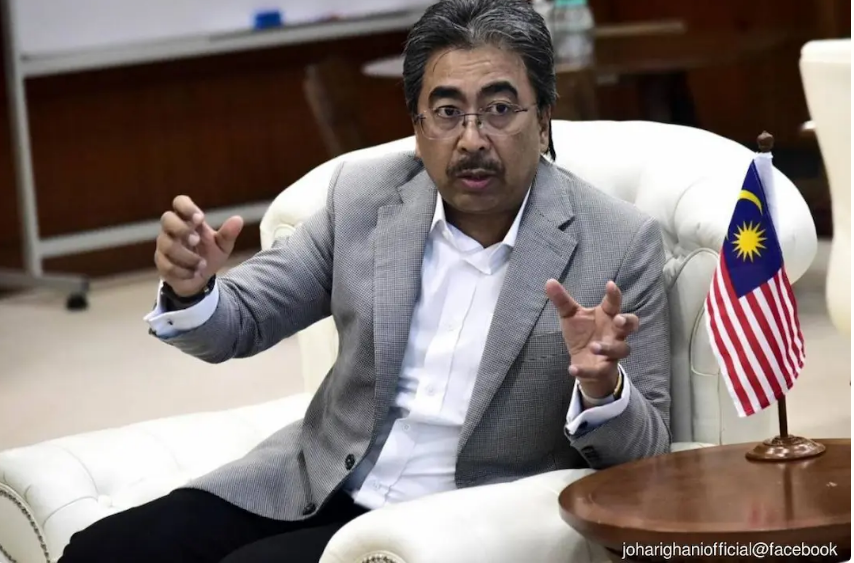
Plantation and Commodities Minister Datuk Seri Johari Abdul Ghani had on Wednesday said the WTO panel had on March 5 issued its final report and concluded that the EU's renewable energy policy, which restricted palm oil biofuels, was discriminatory.
"This ruling from WTO demonstrates that Malaysia's discrimination claims are justified. This vindicates Malaysia's pursuit of justice for our biodiesel traders, companies and employees," he said.
Cargill Malaysia senior merchant Cassendre Lau said the ruling on EU's biofuel policy could positively impact Malaysia's palm oil industry, as it is a major producer of palm oil used in biofuels.
"If the policy is deemed discriminatory, it could potentially open up more opportunities for Malaysian palm oil in the EU market. However, the extent of the impact would depend on the specifics of any changes resulting from the ruling and how they affect trade relations between Malaysia and the EU," she added.
Malaysia, a major palm oil producer, had in January 2021 requested WTO dispute consultations with the EU over measures adopted by the bloc and its member states affecting palm oil and palm crop-based biofuels.
"If the EU conforms with its WTO obligations, you may see changes in trade policies, tariff structures and regulations to align with international standards," said Lau.
This could lead to increased market access, fairer trade practices, and potentially more opportunities for businesses within the EU and globally, she added.
On the contrary, Singapore-based RaboResarch Food and Agribusiness senior analyst Oscar Tjakra said it is still too early to comment on this ruling as they do not know whether the EU will appeal against the WTO panel report.
"If the EU decides not to appeal against the WTO panel report, the EU will need to make adjustments to EU Delegated Act, but need not to change the RED II legal framework. We will need to see details of these adjustments to analyse the impact of this ruling," he told Business Times.
Meanwhile, in an interview with FMT on Thursday, Johari said Malaysia had won key parts of its dispute with the EU over the latter's renewable energy directive known as RED II.
Putrajaya was also successful in challenging several measures maintained by France, Johari added.
He said a three-member panel had ruled that several measures undertaken by the EU and France were "inconsistent with WTO rules".
Particularly, restrictions like the "high ILUC risk cap" and "phase-out" regulations violated trade agreements aimed at preventing unnecessary trade barriers, he told the portal.
The panel also noted that other similar products available in the EU market were not subject to the same restrictions.
"The EU and France must now bring their measures into conformity with their WTO obligations," he added.
Malaysian Palm Oil Board director-general Datuk Ahmad Parveez Ghulam Kadir echoed Johari's statement.
"The ruling highlights the EU's restrictions' inconsistency with WTO rules. This affirms Malaysia's persistent efforts to advocate for the sustainability of the palm oil supply chain.
"Anticipating the EU's obligation to conform to WTO rules, amendments to the EU's renewable energy policy are expected."
He said the board would monitor the EU's regulatory changes to align with the WTO's findings, fostering fair trade practices and recognising Malaysia's contributions to sustainable palm oil production.
https://www.nst.com.my/business/corporate/2024/03/1022741/wto-ruling-can-increase-market-access-malaysian-palm-oil-say
Sumber : New Straits Times