-
Official Websites of
-
MINISTRY OF
PLANTATION AND COMMODITIES -
No. 15, Level 5-13, Persiaran Perdana, Presint 2, 62654 Wilayah Persekutuan Putrajaya


ARKIB BERITA
- Details
- Hits: 724

KOTA KINABALU (June 6): Sawit Kinabalu Group (Sawit Kinabalu) will be the pioneer of the Green Technology Park (GTP) in Sabah, at the same time supporting the state government’s efforts towards achieving sustainable development goals.
In order to realise that goal, Sawit Kinabalu through its subsidiary, Sawit Palm Oil Industrial Cluster Sdn Bhd (SPOIC) signed a Memorandum of Understanding (MoU) with Nextgreen Global Berhad (NGGB) for the establishment of GTP.
Chief Minister Datuk Seri Panglima Hajiji Noor who is also the chairman of Sawit Kinabalu, witnessed the signing of the MoU at Sawit Kinabalu’s new headquarters in Block B, Menara Kinabalu on Thursday.
Sawit Kinabalu was represented by its Group Managing Director and Chief Executive Officer, Victor Ationg while NGGB was represented by its Group Managing Director, Datuk Lim Thiam Huat, as well as Datin Stella Ambrose (Sawit Kinabalu) and Datuk Mohd Yusof Din (NGGB) as witnesses for both entities.
Through the MoU, both parties will explore and implement the main activities of GTP such as establishing a collection and processing center, pulp mill, raw water treatment plant and steam boiler on 400 acres of land belonging to SPOIC in Sandakan.
GTP’s green business concept emphasises renewable energy, recovery, and waste elimination which is the basis for a green economy that can reduce environmental risks and further drive Sawit Kinabalu towards sustainable development.
Earlier, Hajiji launched Sawit Kinabalu’s new headquarters and chaired the company’s board of directors meeting.
He then witnessed the business tithe payment of Sawit Kinabalu for the year 2023 amounting to RM800,000 from Victor to the Supreme Council member of the Islamic Religious Council of Sabah (MUIS), Datuk Mohd Dandan @ Ame Alidin.
According to Victor, the Sawit Kinabalu Group is committed to continuing to fulfill its obligation to pay business tithe to help economic growth and community empowerment, in accordance with the profits recorded by the company, following the performance of CPO oil prices which are expected to increase in the future.
https://www.theborneopost.com/2024/06/06/sawit-kinabalu-group-to-pioneer-green-technology-park/
Sumber : The Borneo Post
- Details
- Hits: 666
KOTA KINABALU: Sabah-owned Sawit Kinabalu, through its subsidiary Kunak Lipids Sdn Bhd, is poised to revolutionise tocotrienols production as Malaysia’s first company to extract it from palm oil waste on a large scale.
This large-scale production is expected to commence in the first quarter of 2025 and is aligned with the government’s vision to foster economic and environmental sustainability in Sabah.
Kunak Lipids employs proprietary technology and high-precision equipment to capture tocotrienols from refined byproducts, reducing environmental waste and creating wealth, thereby contributing to the state’s economic and environmental goals.
Tocotrienols, a form of vitamin E, is used for a variety of health and therapeutic purposes due to its potent antioxidant properties.
Recognising the high demand for tocotrienols in China, Kunak Lipids, with support from the Malaysian Palm Oil Board (MPOB) and Palm Oil Research and Technical Services Institute Malaysia, identified significant market potential during initial marketing explorations.
Cosmetics manufacturers, in particular, are keen to obtain tocotrienols for their products.
Recently, Sawit Kinabalu, through Kinak Lipids, signed a memorandum of understanding with a Shanghai-based trading company, Boce Trade Service Company Ltd, to produce palm oil refinery byproducts and meet the Chinese market demand.
At the signing, Kunak Lipids was represented by its group managing director and chief executive officer Victor Ationg and Boce Trade Service Company Ltd by its general manager Qiu Rong Yu.
The ceremony was witnessed by Deputy Plantations and Commodities Minister Datuk Chan Foong Hin at Shangri-la Pudong Shanghai on June 13.
https://www.thestar.com.my/news/nation/2024/06/16/sawit-kinabalu-pioneers-large-scale-tocotrienols-production
Sumber : The Star
- Details
- Hits: 434
BINTULU (July 15): Sawit Permai Enterprise Sdn Bhd is making waves with their innovative ‘Madani MPOB F5 Improved’ fertiliser at the ongoing Sarawak Agrofest (SAF) 2024, taking place at the Old Bintulu Airport site until July 22.
Managing director Yeong Kui Po said the Madani MPOB F5 Improved fertiliser, part of the Malaysian Palm Oil Board (MPOB) F5 series, represents a significant leap forward for the country’s palm oil industry.
He added that the MPOB F5 series fertilisers are produced under licence by Briar Resources Sdn Bhd.
“Madani MPOB F5 Improved fertiliser represents a revolutionary product with state-of-the-art technology formulated by MPOB utilising Briar’s Advanced and Sustainable Series for Excellence (BASE) technology,” he told The Borneo Post.
Yeong added that the primary objective of Madani MPOB F5 Improved fertiliser is to reduce agricultural input costs, ensure consistent yields, strengthen knowledge sharing of the latest fertiliser technology, and enhance the performance of the Malaysian palm oil industry.
“Our close collaboration with MPOB aims to increase yields for small-scale palm oil farmers while reducing the presence of low-quality fertilisers in the market.
“With competitive pricing for Madani fertilisers, small farmers can enjoy significant economic benefits.
Consistent fertiliser application will not only generate higher incomes but also strengthen the financial stability of Sarawak,” he said.
Central to Sawit Permai’s offerings is BASE technology which significantly enhances crop yields through advanced nutrient delivery systems and optimised formulations, so as to improve nutrient absorption leading to healthier and more robust growth.
“BASE technology not only boosts productivity but also ensures sustainable practices by minimising chemical runoff and preserving soil health.
“By outperforming conventional fertilisers, BASE sets a new standard for agricultural excellence, achieving superior yields while promoting environmental stewardship,” said Yeong.
At Sarawak Agrofest 2024, visitors can explore Sawit Permai’s booth and witness firsthand the impact of BASE technology.
https://www.theborneopost.com/2024/07/15/sawit-permai-unveils-innovative-fertiliser-at-saf-2024/
Sumber : The Borneo Post
- Details
- Hits: 2170
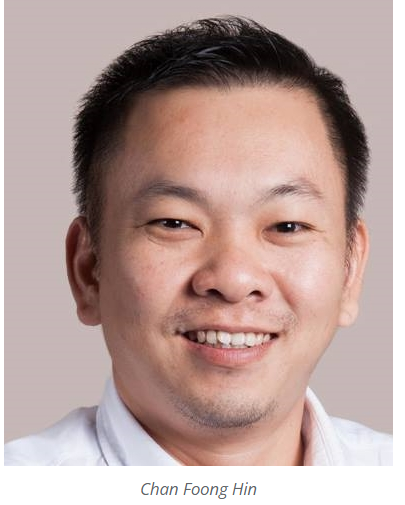
KOTA KINABALU (July 21): Deputy Minister of Plantation and Commodities, Datuk Chan Foong Hin has called on the oil palm industry players in Sabah, especially smallholders, to increase the replanting rate for aging oil palm areas to maintain the state’s palm oil productivity.
He stated that the average palm oil yield in Sabah until April 2024 had decreased by 4% compared to the same period in 2023.
“The performance of fresh fruit bunches (FFB) yield in Sabah from January to April 2024 was recorded at 4.79 tonnes per hectare, a decline of 4.0% compared to 4.99 tonnes per hectare for the same period in 2023.
“Meanwhile, for the period from January to April 2024, the FFB yield in Peninsular Malaysia was 5.18 tonnes per hectare, an increase of 19.4% compared to the same period in 2023, which was 4.34 tonnes per hectare. In Sarawak, the FFB yield increased by 8.7% from 3.80 tonnes per hectare to 4.13 tonnes per hectare,” he said in a statement on Sunday.
According to Chan, the main factor for the decline in FFB yield in Sabah was the reduction in the area of fully mature oil palm trees, which are between nine to 18 years old, with an estimated FFB productivity of around 20 to 24 tonnes per hectare per year.
“Based on statistics from the Malaysian Palm Oil Board (MPOB) in December 2023, the percentage of fully mature oil palm trees in Sabah was estimated at 33.5% compared to 33.7% in the previous year.
“Oil palm trees that have not reached full maturity or are in old age usually produce lower FFB yields, directly affecting the FFB yield for that period. By comparison, the percentage of fully mature oil palm trees in Peninsular Malaysia is 39.4%, and in Sarawak, it is 56.1%,” he added.
Therefore, Chan urged smallholders in Sabah to expedite the replanting process for aging oil palm areas.
“For eligible smallholders, it is recommended to apply for the funds provided by the government for the implementation of the Palm Oil Smallholders Replanting Financing Incentive Scheme (TSPKS) 2.0, worth RM100 million for replanting works.
“As of July 12, 2024, a total of 413 smallholders with a planted area of 1,725 hectares involving financing worth RM26.93 million had been approved by the Malaysian Palm Oil Board (MPOB),” he said.
Chan also noted that the low FFB yield in Sabah for the period from January to April 2024 was also influenced by the El Niño phenomenon and mealy bug attacks.
“Based on current data, mealy bug attacks can affect palm oil production by up to 5%. MPOB, along with the industry and the Sabah Department of Agriculture, has taken appropriate measures to address this issue.
“The MPOB’s TUNAS team is also identifying and compiling a list of smallholder oil palm plantations affected by insect attacks to provide advisory services on control measures to prevent the spread to other areas,” he said.
https://www.theborneopost.com/2024/07/21/smallholders-in-sabah-urged-to-increase-oil-palm-replanting-rate/
Sumber : The Borneo Post
- Details
- Hits: 312
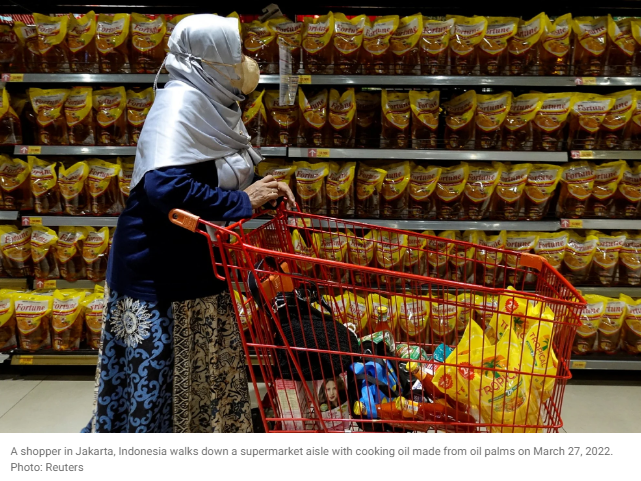

Smallholders are instrumental in Southeast Asia’s palm oil production. Indonesia alone, they cultivate roughly 41 per cent of the land dedicated to oil palm, while in Malaysia, that number is at least 27 per cent. Globally, smallholders are responsible for roughly 35 per cent to 40 per cent of the world’s total oil palm plantations. Therefore, as global concerns about sustainability increase, smallholders play an important role in sustainability initiatives.
However, the path to sustainability is not always smooth for smallholders. Meeting certification standards, like those set by industry watchdog the Roundtable on Sustainable Palm Oil (RSPO), can be complex and costly for those with limited resources. Stringent criteria and documentation requirements can be overwhelming. Regulations such as the European Union Deforestation Regulation add another layer of complexity.
Furthermore, upgrading equipment, improving land management and transitioning to more environmentally friendly methods all require capital that many smallholders simply do not have. Banks and financial institutions might be hesitant to extend credit due to perceived risks like limited financial history or lack of collateral.
Beyond financial limitations, a lack of technical knowledge also poses a crucial challenge. Sustainable oil palm harvesting requires a broad understanding and implementation of best practices in areas such as soil management, fertilisation, pest control, efficient resource use and proper harvesting techniques. Without access to training services, smallholders struggle to acquire this crucial knowledge, hindering their ability to adopt sustainable practices and keep up with evolving certification requirements.
Smallholders also face economic challenges due to their weak position in the supply chain. They often end up accepting lower prices for their fruit, making it difficult to generate the capital needed for sustainable practices.
Further compounding the issue is the volatile nature of palm oil prices. This creates a vicious cycle, where a limited income restricts their ability to invest in sustainability, which can ultimately hurt their long-term profits and yields.
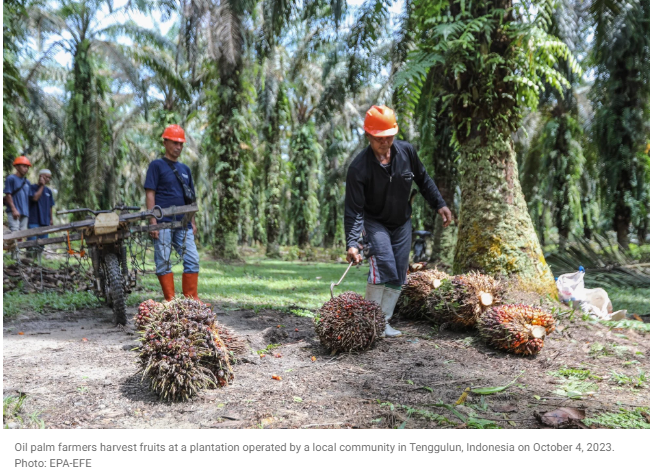
Governments must play a progressive role by implementing targeted support programmes tailored to the specific needs of smallholders. Financial support, such as subsidies or low-interest loans, would help smallholders transition to sustainable practices. Additionally, comprehensive training programmes on best agricultural practices, certification requirements and responsible land management are essential.
Supporting land rights and cooperative structures for smallholders can further empower them.
Indonesia has been using export levies to support smallholders, which is a positive step. However, a more comprehensive approach might be necessary to ensure its range is wide enough.
Certification bodies such as the RSPO also have a crucial role to play in making sustainability more inclusive for smallholders. This could involve simplifying the application process, reducing costs associated with certification and creating group certification options that allow smallholders to pool resources and expertise.
The RSPO’s smallholder strategy is a commendable initiative, but its current scope needs significant growth to effectively serve a wider range of smallholders. Additionally, collaboration among different certification organisations to harmonise standards might help reduce the burden on smallholders and streamline the certification process.
Technology has the potential to be a game changer for smallholders in the oil palm industry, whether it be through mobile apps that give agricultural advice in local languages, digital platforms connecting smallholders directly to buyers or remote sensing technologies that share data that can help with better land management. Of course, not everyone has a high-end smartphone or reliable internet access.
This is where the democratisation of technology comes in. There are user-friendly tools being developed that require minimal technical expertise. Think of simple interfaces with SMS updates. Additionally, exploring alternative methods like community radio broadcasts or local extension worker training programmes can ensure everyone benefits from technological advancement.
Consumer education is another powerful tool to help push the change to sustainable oil palm cultivation. Educating consumers can empower them to make informed choices.
However, systemic change is also crucial. Non-governmental organisations, the media, universities and responsible companies all have a role to play when it comes to raising awareness and advocating for fair and sustainable practices throughout the supply chain. That also goes for supporting the inclusion of smallholders.
The path to sustainable oil palm in Southeast Asia is not an easy one, but there is an inclusive path that we must undertake. Some researchers predict that smallholders will double their production capacity over the next decade. As we strive for sustainability, we must ensure that we’re not leaving them behind.
https://www.scmp.com/opinion/asia-opinion/article/3270183/push-sustainable-palm-oil-isnt-going-far-enough
Sumber : South China Morning Post