-
Official Websites of
-
MINISTRY OF
PLANTATION AND COMMODITIES -
No. 15, Level 5-13, Persiaran Perdana, Presint 2, 62654 Wilayah Persekutuan Putrajaya


ARKIB BERITA
- Details
- Hits: 1110
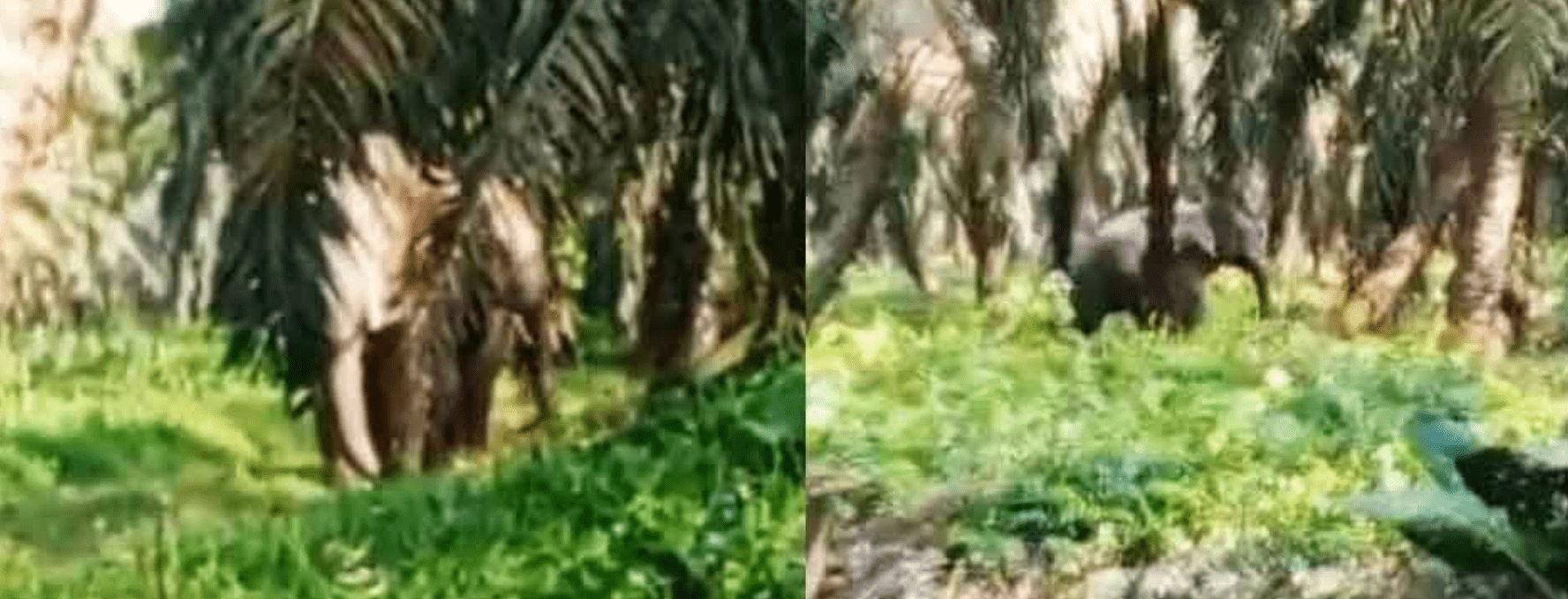
Deputy Plantation and Commodities Minister Datuk Chan Foong Hin and Tawau MPOB officers visited Teck Guan Sg Burung Palm Oil Mill. — Borneo Post pic
TAWAU, Jan 14 — Deputy Plantation and Commodities Minister Datuk Chan Foong Hin said that the RM100 million set aside by the federal government under Budget 2024 as replanting incentives will be in the form of "one-to-one” matching grants through TSPKS 2.0 for qualified smallholders.
"The distribution of this replanting incentive will be one of my ministry’s key projects this year, with the ultimate aim of accelerating the replanting of oil palm plantations that are more than 23 years old and ensuring the continued and sustainable development of Malaysia’s palm oil industry,” he said.
Chan, who is also Member of Parliament for Kota Kinabalu, said this during a dinner organized by the Tawau Chinese Chamber of Commerce on Saturday night.
Chan made a whirlwind working visit to Tawau yesterday. He visited Teck Guan Group of Companies’ palm oil mill near Sungai Burung, Balung in the morning, attended a dialogue meeting with the Tawau Chinese Chamber of Commerce and Tawau Agriculture Association at the Tawau town centre in the afternoon, and then proceeded to the swearing-in ceremony of the Tawau Chinese Chamber of Commerceat SJK© Kung Ming’s school hall in the evening.
Teck Guan Group’s Sg Burung Palm Oil Mill was the first mill that Chan had visited after taking office as the Deputy Minister of Plantation and Commodities on December 13, last year.
Chan noted that the Teck Guan Group was founded by fellow Sabahan entrepreneurs from scratch.
He was received by Datuk Hong Ngit Ming, Managing Director of Teck Guan Group of Companies.
Officers from the Sabah branch of the Malaysian Palm Oil Board (MPOB) were also present.
During the visit to the said palm oil mill, Chan and the MPOB officers had witnessed the entire oil palm processing chain and saw first-hand how the company maximize the use of every part of oil palm in high-productivity operations.
"I also learned that the Teck Guan Group had also invested a lot of efforts in renewable energy power generation, which certainly deserves commendations,” said Chan.
After the palm oil mill visit, Chan attended a dialogue meeting with about 30 committee members from the Tawau Chinese Chamber of Commerce and Tawau Agricultural Association.
During the dialogue, he was informed of the challenges faced by smallholders in the oil palm industry, especially in the Tawau area.
In return, Chan had shared with those present the support that federal government agencies and departments can provide to palm oil smallholders in order to form a complete ecosystem for the sustainable development of the palm oil industry. — Borneo Post
https://www.malaymail.com/amp/news/money/2024/01/14/deputy-minister-rm100m-oil-palm-replanting-incentive-distribution-one-of-plantation-ministrys-key-projects/112438
Sumber : Malay Mail
- Details
- Hits: 314
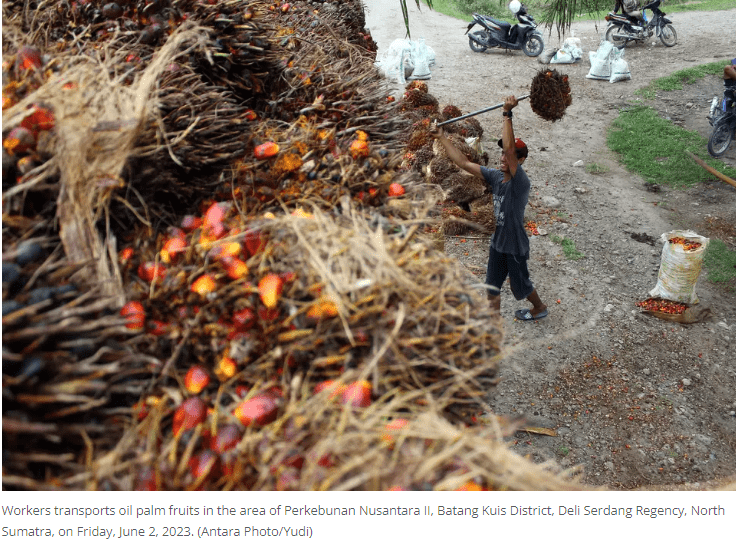
Palm oil has long been a key trade priority for Indonesia. However, as the fourth most populous country in the world, Indonesia is increasingly concerned about the intensifying negative campaigns against palm oil. These campaigns are driven by NGOs, competing vegetable oil industries, and governments at both central and regional levels in various countries. For instance, the European Union (EU) adopted the Renewable Energy Directive II (RED II), which arbitrarily categorizes palm oil as a high "Indirect Land Use Change" (ILUC) risk commodity. This directive mandates a reduction in palm oil consumption in the EU starting in 2021, aiming for its eventual elimination by December 31, 2030.
More recently, the EU introduced the EU Deforestation Regulation (EUDR), a policy framework aimed at reducing the environmental impact of deforestation. The EUDR requires operators and traders who place seven commodities (palm oil, coffee, cocoa, rubber, wood, soy, and cattle) on the EU market or export them from the EU to prove that these products are legal and do not come from land deforested or degraded after December 31, 2020.
Elsewhere, Norway has excluded palm oil biofuel from government procurement processes, a regional state in Pakistan proposed a tariff increase on palm oil for health-related reasons, and India has repeatedly raised its import tariffs on palm oil due to domestic political considerations. This situation evokes the beggar-thy-neighbor policy, where one country addresses its economic issues through measures that often exacerbate the economic difficulties of other nations.
For producing countries, palm oil represents more than just a commodity. The palm oil sector provides livelihoods for 16 million Indonesians through direct and indirect employment. Small farmers in rural and remote areas are heavily involved in palm plantations, comprising 42 percent in Indonesia, 40 percent in Malaysia, and 80 percent in Nigeria. In Indonesia alone, about 61 cities and small towns rely on this sector for their development and sustenance. Additionally, palm oil is a crucial source of export revenue for Indonesia, generating around $ 22.67 billion in 2023, with the EU, China, and India being the primary export destinations.
Given these stakes, it is unsurprising that Indonesia voices significant concerns over increased efforts to wage a trade war against palm oil. From Indonesia's perspective, if the issue is environmental impact, then all vegetable oils should be treated equally. Targeting palm oil without applying the same standards to other vegetable oils appears discriminatory and biased. Indonesia believes that environmental issues should be addressed holistically, without singling out specific products or sectors.
A report issued by the European Commission's Directorate-General for Environment (DG Envi) in 2013, titled "The Impact of EU Consumption on Deforestation," suggests that globally, the main crops contributing directly or indirectly to deforestation include soybeans (19 percent), maize (11 percent), oil palm (8 percent), rice (6 percent), and sugar cane (5 percent). Another report highlights that livestock is a primary non-vegetable oil contributor to deforestation, responsible for 18% of greenhouse gas emissions, 55% of water consumption, and 45% of land use.
Regarding health concerns, existing studies suggest that consuming saturated fatty acids from palm oil does not inherently increase the risk of cardiovascular diseases. Even if saturated fats need to be regulated, measures should be non-discriminatory, targeting all food products containing saturated fats, regardless of their origin.
Other vegetable oils also pose health risks. For example, canola oil is associated with kidney and liver problems, heart conditions, hypertension, strokes, and growth retardation in infants due to its erucic acid content and higher trans fat levels. Over 90 percent of canola oil is genetically modified, raising concerns about toxicity, allergic reactions, immune suppression, cancer, and nutritional loss. Similarly, soybean oil is linked to obesity, diabetes, cardiovascular diseases, and inflammation due to excessive Omega-6 fatty acids. It is also manufactured using harsh chemical solvents, which can cause serious health issues.
The question remains: why is palm oil continually blamed as the main source of environmental and health problems? Palm oil is the most efficient oil crop, producing the highest tonnage per hectare. When sustainably produced and properly processed, palm oil is not a threat to nature or human health but rather a gift from nature. Campaigning against palm oil in favor of other vegetable oils will be perceived as punitive by Indonesian farmers. This approach neither addresses the issues effectively nor promotes free and fair trade.
As global value chains face disruptions and more countries adopt reciprocal trade measures, Indonesia might consider following suit if it feels unfairly treated. However, Indonesia remains hopeful that fair trade is possible, which is why it brought the palm oil issue to the WTO against the EU. It is a matter of principle, and the government should not trade off its offensive stand on palm oil for its defensive interest in nickel, for example. Indonesia should hold its ground, as the livelihoods of millions are at stake.
https://jakartaglobe.id/opinion/draconian-policy-against-palm-oil
Sumber : Jakarta Globe
- Details
- Hits: 263

PETALING JAYA: Plantation and commodities minister Johari Ghani has called on the European Union (EU) to end its “arbitrary and unjustifiable discrimination” against palm oil.
“After all, palm oil is the most productive oilseed crop of all,” he said in a comment published in the EU’s The Parliament Magazine yesterday.
Johari said palm oil currently yields an average of 3.31 metric tonnes per hectare (MT/ha), significantly higher than soybean (O.43 MT/ha), rapeseed (0.78 MT/ha) and sunflower (0.76 MT/ha).
“This means it uses less land, less fertliser and fewer other inputs,” he said, adding that Malaysia’s palm oil is capable of competing strongly in a fair market by offering lower prices and assuring global consumers a high quality.
The minister also called on the EU to act fairly in the enforcement of its strict environmental and sustainability laws and targets.
Acknowledging the need to support global efforts to protect the environment, Johari reaffirmed Malaysia’s commitment to attaining its Net Zero targets and all associated environmental goals.
“We will maintain a minimum 50% of our land as forest area (the global average is 31%); new mandatory certification laws have been introduced such as the Malaysian Sustainable Palm Oil (MSPO) standard; and a serious commitment is in place for an energy transition plan to reach Net Zero emissions by 2050,” he wrote.
However, Johari said Malaysia’s success in attaining those targets are also dependent on the actions of its trading partners.
The EU must reciprocate by showing fairness and lending the appropriate support during a “difficult transition period” given the country’s status as a developing nation, he said.
Johari said Malaysians have taken big strides towards better protection of the environment, but are also concerned for the security and the prosperity of their families and communities.
“For many people, those (environmental) advances are relatively new, and relatively fragile,” he observed.
For that reason, Johari said the country must be allowed to meet its economic targets so that all Malaysians can be assured of their social and financial wellbeing.
The minister said the EU has a huge role to play in this regard.
Although the MSPO ensures that Malaysia is well-positioned to fulfil EU environmental traceability requirements, Johari said regard must also be had for the 450,000 small farmers engaged in oil palm cultivation.
“They do not have the technological sophistication demanded by EU rules, and need more time and flexibility.
“If the EU wishes to bring developing countries with them on the Net Zero journey, it should not deny small farmers the ability to put food on the table for their families and communities,” he said.
Johari also called on the EU to accord due respect and recognition for the progress Malaysia has achieved to date.
“The EU could support Malaysia by recognising the value that MSPO brings, as well as the value that Malaysia provides to the world by protecting 50% of land as a permanent forest area,” he wrote.
The minister said Malaysia’s commitment to protecting tropical ecosystems, biodiversity and CO2 sequestration are “efforts worthy of support and recognition”.
https://www.freemalaysiatoday.com/category/nation/2024/04/26/end-unjustifiable-discrimination-against-malaysias-palm-oil-johari-tells-eu/
Sumber : Free Malaysia Today
- Details
- Hits: 3040

A World Trade Organization (WTO) panel ruled earlier this month on a complaint brought by Malaysia against the European Union over the bloc's plans to phase out the import of palm oil as biofuel because of environmental concerns.
Malaysia, the world's second largest producer of palm oil after Indonesia, brought a case to the WTO in early 2021 against the EU, France and Lithuania.
The Southeast Asian country contested that the EU had violated international trade rules in its policy to phase-out the import of palm oil as a biofuel due to deforestation and emissions risks under the EU's second Renewable Energy Directive (RED II).
Indonesia also filed a case with the WTO but asked for it to be suspended a day before the result of Malaysia's case was announced.
What was the WTO decision based on?
The three-person panel voted by two-to-one in favor of the EU's ability make rules against imports of crop-based fuels for environmental reasons.
However, it also said that the EU was at fault for how it had prepared and published its policy, which amounted to "arbitrary or unjustifiable discrimination" against Malaysia.
Much of this revolved around how the EU defined its assessment of emissions, along with indirect land use change (ILUC), which measures the impact of diverting agricultural land previously designed for food production to biofuel production,
The WTO panel found the EU's study on the ILUC risk of palm oil, using data from 2008 and 2016, was potentially outdated.
It also said an arbitrary choice was made to assess emissions from palm oil production over a 10-year period, when palm trees usually survive for up to 30 years.
"There are deficiencies in the design and implementation of the low ILUC-risk criteria," the WTO panel noted in a 348-page report published on March 5.
EU relations with Malaysia, Indonesia at risk
One dissenting panelist also offered greater support to Malaysia's appeal that the EU policy is protectionist, since it is accused of singling out palm oil while overlooking the environmental impact of biofuels produced within Europe, such as rapeseed.
Chris Humphrey, executive director of the EU-ASEAN Business Council, said that the WTO ruling will be "viewed by both the EU and Malaysia as a victory given the mixed outcome."
"While we await the delayed WTO ruling on Indonesia's complaint on palm oil, it is clear that dialogue between the EU and these key ASEAN partners is the only way forward in dealing with the concerns that both Indonesia and Malaysia have," he added.
The EU Directorate-General for Trade said in a statement that the bloc "intends to take the necessary steps to adjust the Delegated Act."
The European Commission did not respond to requests for comment.
Daniel Caspaty, an MEP and chair of the European Parliament's committee on relations with ASEAN states, told DW that the WTO panel's findings "marks a significant moment in the debate on trade policy and environmental protection."
"This decision will undoubtedly have implications for the EU's relations with Indonesia and Malaysia, particularly concerning the palm oil dispute," he added.
Caspaty said Europe must urgently find a resolution, as well as with other conflicts such as discussions surrounding nickel.
Reactions to WTO verdict
Malaysia's government responded to the WTO verdict as though it had emerged victorious.
Abdul Ghani, Malaysia's minister of plantation and commodities, called it a "vindication" of Kuala Lumpur's "pursuit of justice" for its palm oil sector.
Speaking to local media, he argued that the WTO ruling "clearly finds fault with the EU's rules on indirect land use change to ban palm oil biofuels," adding that it "also finds fault with the EU's approach to notifying and consulting with other economies when introducing new trade measures."
Indonesian policymakers, meanwhile, will take "cold comfort from headlines celebrating the ruling about discrimination," said Jakarta-based analyst Kevin O'Rourke from the consultancy Reformasi Information Services.
It remains to be seen whether Indonesia's president-elect, Prabowo Subianto, will alter Jakarta's stance around this issue when he enters office later this year.
Humphrey from the EU-ASEAN Business Council said he now hopes "the ruling draws a line under the dispute," and that the EU, Malaysia and Indonesia can now focus on working out their differences through the ad-hoc joint task force setup last year.
The task force last met in February and is expected to reconvene for more talks in September in Brussels.
EU should set 'realistic' standards for other countries
The EU is nearing the end of free-trade talks with Indonesia and has been in talks with Malaysia about restarting negotiations for a bilateral free-trade pact.
However, Brussels has recently come under attack from more third parties over how it classifies its rules related to deforestation.
For Jakarta-based analyst O'Rourke, greater clarity can benefit Indonesia and Malaysia.
"Unlike some of their competitors, the two nations are able to achieve compliance in many instances and that will constitute a form of competitive advantage over the long term. And, of course, without such rules, climate change will imperil these as well as all other countries," he said.
This is likely to require the EU to alter how it approaches trade with partners.
Frederick Kliem, a research fellow and lecturer at the S. Rajaratnam School of International Studies in Singapore, said Brussels currently applies "a very detailed, highly bureaucratic approach to such matters."
"This is OK internally, where the EU is well understood, appreciated and policies are well communicated. This is, however, not the same for third parties," he added.
"If the EU does not moderate its high standards and make them more realistic for third parties to achieve, I fear it will be very difficult to achieve further free trade agreements."
https://amp.dw.com/en/eu-palm-oil-ban-malaysia-indonesia-seek-trade-justice/a-68606071
Sumber : Nature and Environment Malaysia
- Details
- Hits: 157
SUMBER: NEW STRAITS TIMES, MS 16
27 JUN 2022