-
Official Websites of
-
MINISTRY OF
PLANTATION AND COMMODITIES -
No. 15, Level 5-13, Persiaran Perdana, Presint 2, 62654 Wilayah Persekutuan Putrajaya


BERITA SAWIT 2024
- Details
- Hits: 497
KUALA LUMPUR: The Plantations and Commodities Ministry will discuss with the Malaysian Islamic Development Department (Jakim) to include Malaysia Sustainable Palm Oil (MSPO) certification alongside Halal certification as a requirement for marketing palm oil.
This, according to its minister, Datuk Seri Johari Abdul Ghani, is due to the fact that Halal is a globally recognised and authoritative certification in Malaysia.
"Through MSPO, it encompasses the environment and where they can find out how the palm oil process goes until it is bottled.
"It also covers the condition of the palm oil plantation, the management of the plantation, the use of very high standards and whatever chemicals are used are safe for the product to be produced."
Hence, Johari said, the MSPO could prove to consumers that the product was not only assuredly clean, but also of high quality and safety.
He said previously, palm oil sold in the country had to be Halal-certified, irrespective of brand, and wanted MSPO to be included in the certification requirements.
"That's why if possible, we want to impose conditions on palm oil products that are marketed in the country to have an MSPO certification before they can be distributed here.
"Ideally, palm oil products sold in all stores and supermarkets in our country must have the MSPO certification," he told reporters after launching Saji's new cooking oil label with the MSPO logo and signing of a strategic collaboration between MSPO and FGV Holdings Bhd.
The MSPO certification is Malaysia's national certification standard and was developed with input from stakeholders in the palm oil industry.
The certification, first launched in November 2013, was officially implemented on a voluntary basis in January 2015 with improvements throughout the year.
Recently, the certification was revised last year with stricter standards, including a deforestation deadline of Dec 31, 2019, which meets the deadline of the European Union (EU) Deforestation Regulation.
Other revisions included the identification of greenhouse gas (GHG) emissions and their reduction monitoring plans, the introduction of new guidance on free, prior and informed consent (FPIC) and the protection of human rights defenders and whistleblowers.
https://www.nst.com.my/amp/news/nation/2024/03/1023404/johari-wants-mspo-alongside-halal-cert-requirement-marketing-palm-oil
Sumber : New Straits Times
- Details
- Hits: 1299
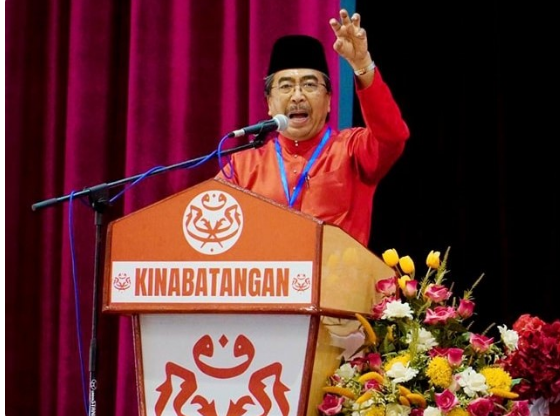
NEW DELHI: A better replanting rate of older oil palm areas can increase Malaysia's annual palm oil output by 2.5 million tonnes, Plantation and Commodities Minister Datuk Seri Johari Abdul Ghani said.
He has raised concern about the low rate of replanting by independent smallholders, who number about 450,000 and have 1.5 million hectares under cultivation.
"Our replanting has dropped significantly. Based on industry standards, we should replant 4-5 per cent, but our national average is only about 1.8 per cent," he told reporters here.
Increasing the replanting rate to industry standards will add more than 2.5 million tonnes to the total palm oil production, he said.
As Malaysia follows sustainable palm oil standards, it will not open up new areas for plantations and will instead focus on higher yield on the current harvested area of 5.7 million hectares, said Johari.
Malaysia's forest cover, which is 54 per cent at present, cannot drop below 50 per cent as part of the country's climate commitments.
Johari said Malaysia was working on a number of initiatives such as greater focus on research and development, more replanting and consolidation of smallholdings to grow output.
Malaysia produced 18.6 million tonnes of palm oil in 2023 compared with about 20 million tonnes a decade ago.
Meanwhile, Malaysia and India discussed ways to increase cooperation in the palm oil sector.
Johari and Indian Agriculture Minister Shivraj Singh Chouhan met on Thursday to explore opportunities in the agriculture field, including collaboration on the Indian initiative known as "the National Mission on Edible Oils – Oil Palm".
Under the scheme launched in 2021, India aims to expand its oil palm cultivation area manifold as part of its efforts to reduce dependence on imported edible oil.
"In this endeavour, Malaysia can provide expertise in improving crop yields, converting underutilised land into productive oil palm plantations, and nurturing the growth of oil palm cultivation," Johari earlier told an industry conference.
https://www.nst.com.my/news/nation/2024/07/1078822/johari-better-replanting-rate-can-raise-malaysian-annual-palm-oil-output
Sumber : New Straits Times
- Details
- Hits: 531
MALAYSIAN palm oil producer Johor Plantations Group (JPG) and a shareholder expect to raise about RM735 million (S$211 million) in an initial public offering (IPO), putting the group on track to execute the country’s biggest listing in over two years.
JPG kicked off its IPO on Wednesday (Jun 12) with an offering of up to 875 million shares, representing a 35 per cent stake in the company, according to terms of the deal seen by Bloomberg News. The IPO exercise values the palm oil firm at RM2.1 billion.
The share sale is set to be the largest in Malaysia since Farm Fresh’s US$240 million offering in March 2022, data compiled by Bloomberg show. JPG’s parent – Kulim Malaysia, the plantations arm of Johor Corp, the development and investment business of the Johor state government – is also offering shares in the IPO, and will retain a 65 per cent stake in the company after the listing.
“We intend to diversify to meet our future growth aspirations by becoming a fully integrated palm oil producer through our venture into the downstream segment, which focuses on speciality oils and fats,” JPG managing director Mohd Faris Adli Shukery said in Kuala Lumpur.
Malaysia is the world’s biggest palm oil producer after Indonesia. JPG will be Johor Corp’s second unit to be publicly listed after healthcare division KPJ Healthcare, which is valued at RM8.56 billion.
The IPO comes as benchmark prices for palm oil traded in Kuala Lumpur disappoint analysts due to lukewarm demand. A strong US dollar, a tepid Chinese economy and concerns of a robust recovery in supplies from the world’s biggest growers have contributed to the weakness. Still, prices may be supported as adverse weather lowers yields.
https://www.businesstimes.com.sg/international/asean/johor-plantations-kulim-eye-biggest-malaysian-ipo-two-years
Sumber : The Business Times
- Details
- Hits: 729
Deputy Minister of Plantation and Commodities Datuk Chan Foong Hin flanked by (from left) Malaysian Palm Oil Council CEO Belvinder Sron, Kuay Cheow Kwee from TPOZ, MPC senior undersecretary for palm oil and sago industries division Severinus Tukah, Kow Tiat Yong (KLK Oleo), Malaysian consul general in Shanghai Syed Farizal Aminy Syed Mohamad, Ku Kok Peng (KLK), Malaysian Palm Oil Board director general Datuk Dr Ahmad Parveez Ghulam Nadir and Xia Jian Jun (TPOZ).
SHANGHAI (July 11): Deputy Minister of Plantation and Commodities Datuk Chan Foong Hin on Wednesday officiated the launch of Kuala Lumpur Kepong Bhd's (KL:KLK) new high-purity fatty acids and glycerin plant in Zhangjiagang, Suzhou located in the Jiangsu province of China, bringing the facility’s annual processing capacity to 500,000 tonnes.
The oleochemical complex located on 58 acres of the third-tier city that is about 130km away from Shanghai is owned and operated by KLK’s wholly-owned Taiko Palm-Oleo (Zhangjiagang) Co Ltd (TPOZ). The expansion makes TPOZ one of the largest and most technologically advanced oleochemical production plants in China.
“TPOZ’s expansion is commendable and it’s important to highlight a Malaysian success story in China because this is a very competitive market. Not many companies could go overseas but a lot of companies that went abroad are from the plantation sector. I can safely say that Malaysia is the pioneer for this palm oil industry,” Chan said at the ribbon cutting ceremony on Wednesday.
TPOZ was incorporated in January 2004 while its first plant was commissioned in 2006.
It produces fatty acids, glycerine, soap noodles, triacetin and fatty acid esters. The products are used in various sectors such as daily chemicals, engineering plastics, rubber, textiles, paper, pharmaceuticals and coatings.
“Our journey began with the vision of becoming an integrated player in the oils and fats sector, both locally and internationally. The presence of our facility in Zhangjiagang has been pivotal in realising this vision. It has enabled us to cater to a growing market, catering to both domestic consumption and international export,” said Kow Tiat Yong, deputy CEO of KLK OLEO, KLK’s oleochemicals manufacturing division.
“Our objective has always been clear: to enhance our production capacity and seize the opportunities presented by the burgeoning market in the People’s Republic of China, a country with a vast and dynamic economy,” he added.
KLK declined to disclose the capital expenditure for the new plant, saying it needed to preserve its position in China’s highly competitive oleochemical market.
Chan was in Shanghai for a working visit to promote Malaysian palm oil and pepper.
The working visit was organised by the ministry, in collaboration with Palm Oil Research and Technical Service Institute of Malaysian Palm Oil Board.
https://theedgemalaysia.com/node/718549
Sumber : The Edge Malaysia
- Details
- Hits: 314
KUALA LUMPUR: Malaysia and the world's largest importer of palm oil, India, will work together to counter the anti-palm oil campaign by the West.
Plantation and Commodities Minister Datuk Seri Johari Abdul Ghani said India which imported 3.3 million metric tonne of palm oil worth RM13.3 billion from Malaysia in 2023, is championing Malaysia's palm oil products growth and export potential.
"India wants us to emphasise on sustainable palm oil production that can be exported to many more countries," he said.
India's push should be motivation enough for local industry players to ramp up sustainable palm oil production.
Johari is in New Delhi leading the Malaysian Agricommodity Economic Mission to India from July 17 to 18, to strengthen bilateral trade relationship and explore new cooperation opportunities.
"Industry players should start thinking about sustainable palm oil production and we hope they will continue to focus on increasing productivity," he said.
Today, Johari met with representatives from Adani Wilmar Ltd, a joint venture that has been in operation for over 25 years in India, an importer of palm oil products from Malaysia.
Tomorrow, he is scheduled to pay a courtesy call to the Indian Minister of Agriculture and Farmers' Welfare to discuss issues and proposals related to trade cooperation in the agricommodity sector of both countries.
Johari will also hold an engagement session with Indian vegetable oil industry players and will deliver a keynote address at the Indian Vegetable Oil Producers Association (IVPA) Global Roundtable 3.0 Conference at IVPA's recommendation.
The round table conference will be attended by leaders of the Indian vegetable oil industry.
India is a main export market for Malaysia's palm oil followed by China.
https://www.nst.com.my/amp/business/economy/2024/07/1077901/malaysia-and%C2%A0india%C2%A0-work-together-counter-anti-palm-oil-campaigns
Sumber : New Straits Times