-
Official Websites of
-
MINISTRY OF
PLANTATION AND COMMODITIES -
No. 15, Level 5-13, Persiaran Perdana, Presint 2, 62654 Wilayah Persekutuan Putrajaya


BERITA SAWIT 2024
- Details
- Hits: 474
THE benchmark active Malaysian crude palm oil futures contract experienced a notable decline after reaching RM4,443 per metric tonne in early April. This came after the breakout of a mid-term parabolic bowl accumulation pattern that began forming in July 2023 and culminated in mid-March 2024. Bearish sentiments, influenced by anticipated weaker exports, increased production, lack of competitive pricing against other vegetable oil substitutes and stabilisation of the Malaysian ringgit after its continued depreciation, have driven this decline.
The recent decline in crude palm oil prices has restored its price competitiveness against other vegetable oils as spreads narrowed, supporting current price levels. However, any potential for significant upside may be limited if it becomes relatively more expensive compared to its substitutes.
Therefore, sharp price movements are likely to quickly retrace and normalise without strong fundamental triggers from demand and supply. Since May 2024, the palm oil market has entered a phase of price consolidation, forming a short-term symmetrical triangle with prices converging around RM3,930 per metric tonne. A breakout from this pattern is anticipated within the next one to two weeks.
Zooming out, the current price patterns align with a longer-term parabolic bowl accumulation pattern that began forming in July 2022, following a sharp decline from the all-time high in Q2 2022.
Looking ahead, the likely path appears to be upward for the coming month, with immediate resistance at RM4,150 per metric tonne and stronger resistance at RM4,500 per metric tonne, which coincides with the resistance line of the longer-term pattern. Conversely, if market fundamentals trigger a downside breakout from the symmetrical triangle, support levels are expected at RM3,800 and RM3,500 per metric tonne.
This would maintain alignment with the longer-term pattern, set to complete by Q2 2025, targeting the RM4,500 resistance level by then.
The Malaysian ringgit, pivotal in crude palm oil futures trading, shows potential for appreciation against the US dollar following a triple top formation in the USD/MYR pair in October 2023, February 2024, and April 2024. This suggests limited upside potential for palm oil prices due to increased costs for US dollar holders, potentially dampening demand.
https://www.businesstimes.com.sg/companies-markets/crude-palm-oil-futures-set-gradual-ascent
Sumber : The Business Times
- Details
- Hits: 360
Taking to //www.tiktok.com/@bradmie85/video/7388386562922286344">TikTok, this netizen shared how a crude palm oil spill in Port Klang affected the waterways due to a leakage in the factory’s pipes.
Turning the waterway orange, men can be seen plunging themselves into the river and pumping out spilt oil.
Taking to the comments section, here is what we found out about the situation.
Apparently, a pipe burst caused the oil spill. The oil can’t be used as it is still considered crude oil. In due time, the oil may solidify and it will have a much bigger impact on the ecosystem.
Here are some choice comments that were left behind in the TikTok post by Malaysians.
“A drum of CPO is around RM300++.”
“Won’t it affect their skin? CPO is used for cooking oil, cosmetics and soap, so it is not harmful to the skin.”
Let’s hope that the cleanup will get underway soon.
https://worldofbuzz.com/crude-palm-oil-spill-devastates-port-klang-waterways-turning-it-bright-orange/
Sumber : World of Buzz
SAWIT : Deputy minister urges palm oil industry to repurpose residuals for sustainable aviation fuel
- Details
- Hits: 403
KUALA LUMPUR (July 16): The palm oil industry should explore repurposing residuals as a crucial feedstock for sustainable aviation fuel (SAF), moving beyond traditional uses of palm oil, said Deputy Investment, Trade and Industry Minister Liew Chin Tong.
He emphasised the need for the palm oil industry, alongside other non-aviation sectors, to contribute to positioning Malaysia at the forefront of the sustainable fuel landscape.
“This is also an opportunity for us to connect Malaysian industries horizontally, so that not only are we supplying the global supply chain, but also creating more domestic innovations and products that will eventually be of relevance globally,” he said during the opening remarks at the MyAero Sustainable Aviation Symposium 2024 today.
Liew highlighted the importance of both vertical integration within Malaysian industries and horizontal linkages between sectors to shape the aviation industry’s future.
He also referenced the Malaysia Aerospace Industry Blueprint 2030, detailing 41 initiatives expected to generate RM55.2 billion annually and create 32,000 high-tech jobs by 2030.
“We hope to establish Malaysia as the aerospace hub in the region and the global community, and to build synergy with neighbouring states through promoting supply chain development and the use of sustainable alternatives such as sustainable energy fuel, electricity and hydrogen-based energy,” he said.
Meanwhile, National Aerospace Industry Corporation Malaysia (Naico) chief executive officer Prof Shamsul Kamar Abu Samah highlighted Malaysia’s industry environmental, social and governance (iESG) framework as pivotal for aerospace firms transitioning to sustainable practices.
“This includes initiatives such as developing cleaner technologies, improving fuel efficiency and investing in sustainable manufacturing processes.
“Collaborative partnerships between governments, aerospace companies and research institutions are essential for driving these innovations forward and achieving shared environmental, social and governance goals while maintaining economic viability and competitiveness in the global market,” he added. – Bernama
https://www.theborneopost.com/2024/07/16/deputy-minister-urges-palm-oil-industry-to-repurpose-residuals-for-sustainable-aviation-fuel/
Sumber : The Borneo Post
- Details
- Hits: 1167

Deputy Plantation and Commodities Minister Datuk Chan Foong Hin and Tawau MPOB officers visited Teck Guan Sg Burung Palm Oil Mill. — Borneo Post pic
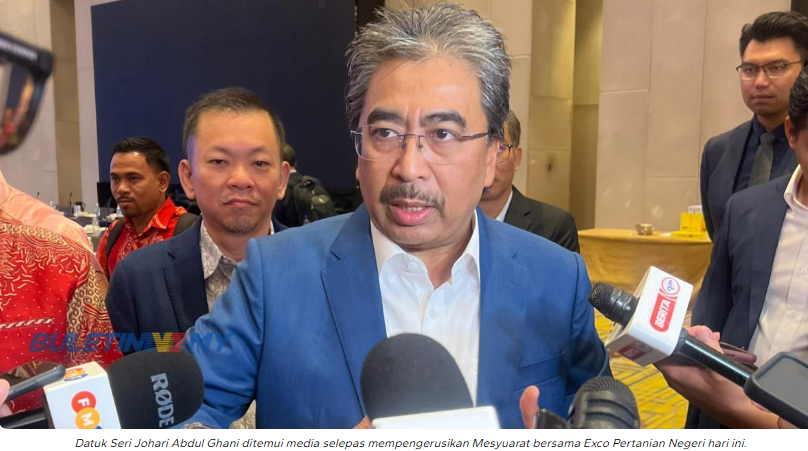
TAWAU, Jan 14 — Deputy Plantation and Commodities Minister Datuk Chan Foong Hin said that the RM100 million set aside by the federal government under Budget 2024 as replanting incentives will be in the form of "one-to-one” matching grants through TSPKS 2.0 for qualified smallholders.
"The distribution of this replanting incentive will be one of my ministry’s key projects this year, with the ultimate aim of accelerating the replanting of oil palm plantations that are more than 23 years old and ensuring the continued and sustainable development of Malaysia’s palm oil industry,” he said.
Chan, who is also Member of Parliament for Kota Kinabalu, said this during a dinner organized by the Tawau Chinese Chamber of Commerce on Saturday night.
Chan made a whirlwind working visit to Tawau yesterday. He visited Teck Guan Group of Companies’ palm oil mill near Sungai Burung, Balung in the morning, attended a dialogue meeting with the Tawau Chinese Chamber of Commerce and Tawau Agriculture Association at the Tawau town centre in the afternoon, and then proceeded to the swearing-in ceremony of the Tawau Chinese Chamber of Commerceat SJK© Kung Ming’s school hall in the evening.
Teck Guan Group’s Sg Burung Palm Oil Mill was the first mill that Chan had visited after taking office as the Deputy Minister of Plantation and Commodities on December 13, last year.
Chan noted that the Teck Guan Group was founded by fellow Sabahan entrepreneurs from scratch.
He was received by Datuk Hong Ngit Ming, Managing Director of Teck Guan Group of Companies.
Officers from the Sabah branch of the Malaysian Palm Oil Board (MPOB) were also present.
During the visit to the said palm oil mill, Chan and the MPOB officers had witnessed the entire oil palm processing chain and saw first-hand how the company maximize the use of every part of oil palm in high-productivity operations.
"I also learned that the Teck Guan Group had also invested a lot of efforts in renewable energy power generation, which certainly deserves commendations,” said Chan.
After the palm oil mill visit, Chan attended a dialogue meeting with about 30 committee members from the Tawau Chinese Chamber of Commerce and Tawau Agricultural Association.
During the dialogue, he was informed of the challenges faced by smallholders in the oil palm industry, especially in the Tawau area.
In return, Chan had shared with those present the support that federal government agencies and departments can provide to palm oil smallholders in order to form a complete ecosystem for the sustainable development of the palm oil industry. — Borneo Post
https://www.malaymail.com/amp/news/money/2024/01/14/deputy-minister-rm100m-oil-palm-replanting-incentive-distribution-one-of-plantation-ministrys-key-projects/112438
Sumber : Malay Mail
- Details
- Hits: 380
Palm oil has long been a key trade priority for Indonesia. However, as the fourth most populous country in the world, Indonesia is increasingly concerned about the intensifying negative campaigns against palm oil. These campaigns are driven by NGOs, competing vegetable oil industries, and governments at both central and regional levels in various countries. For instance, the European Union (EU) adopted the Renewable Energy Directive II (RED II), which arbitrarily categorizes palm oil as a high "Indirect Land Use Change" (ILUC) risk commodity. This directive mandates a reduction in palm oil consumption in the EU starting in 2021, aiming for its eventual elimination by December 31, 2030.
More recently, the EU introduced the EU Deforestation Regulation (EUDR), a policy framework aimed at reducing the environmental impact of deforestation. The EUDR requires operators and traders who place seven commodities (palm oil, coffee, cocoa, rubber, wood, soy, and cattle) on the EU market or export them from the EU to prove that these products are legal and do not come from land deforested or degraded after December 31, 2020.
Elsewhere, Norway has excluded palm oil biofuel from government procurement processes, a regional state in Pakistan proposed a tariff increase on palm oil for health-related reasons, and India has repeatedly raised its import tariffs on palm oil due to domestic political considerations. This situation evokes the beggar-thy-neighbor policy, where one country addresses its economic issues through measures that often exacerbate the economic difficulties of other nations.
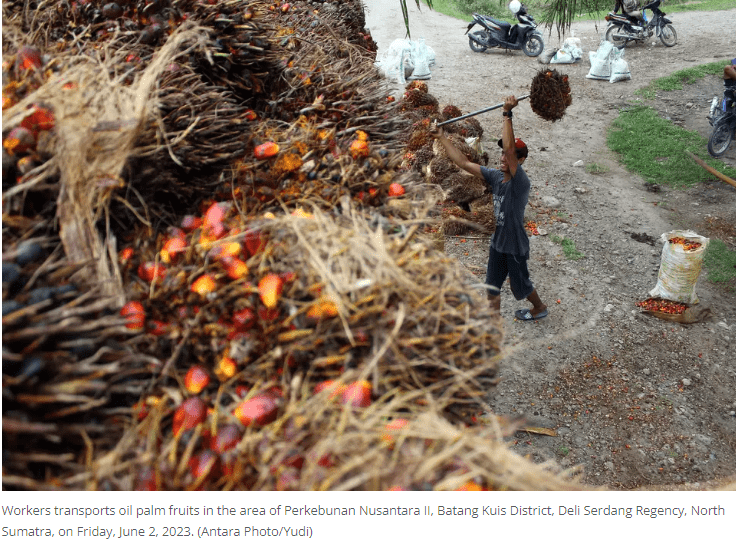
For producing countries, palm oil represents more than just a commodity. The palm oil sector provides livelihoods for 16 million Indonesians through direct and indirect employment. Small farmers in rural and remote areas are heavily involved in palm plantations, comprising 42 percent in Indonesia, 40 percent in Malaysia, and 80 percent in Nigeria. In Indonesia alone, about 61 cities and small towns rely on this sector for their development and sustenance. Additionally, palm oil is a crucial source of export revenue for Indonesia, generating around $ 22.67 billion in 2023, with the EU, China, and India being the primary export destinations.
Given these stakes, it is unsurprising that Indonesia voices significant concerns over increased efforts to wage a trade war against palm oil. From Indonesia's perspective, if the issue is environmental impact, then all vegetable oils should be treated equally. Targeting palm oil without applying the same standards to other vegetable oils appears discriminatory and biased. Indonesia believes that environmental issues should be addressed holistically, without singling out specific products or sectors.
A report issued by the European Commission's Directorate-General for Environment (DG Envi) in 2013, titled "The Impact of EU Consumption on Deforestation," suggests that globally, the main crops contributing directly or indirectly to deforestation include soybeans (19 percent), maize (11 percent), oil palm (8 percent), rice (6 percent), and sugar cane (5 percent). Another report highlights that livestock is a primary non-vegetable oil contributor to deforestation, responsible for 18% of greenhouse gas emissions, 55% of water consumption, and 45% of land use.
Regarding health concerns, existing studies suggest that consuming saturated fatty acids from palm oil does not inherently increase the risk of cardiovascular diseases. Even if saturated fats need to be regulated, measures should be non-discriminatory, targeting all food products containing saturated fats, regardless of their origin.
Other vegetable oils also pose health risks. For example, canola oil is associated with kidney and liver problems, heart conditions, hypertension, strokes, and growth retardation in infants due to its erucic acid content and higher trans fat levels. Over 90 percent of canola oil is genetically modified, raising concerns about toxicity, allergic reactions, immune suppression, cancer, and nutritional loss. Similarly, soybean oil is linked to obesity, diabetes, cardiovascular diseases, and inflammation due to excessive Omega-6 fatty acids. It is also manufactured using harsh chemical solvents, which can cause serious health issues.
The question remains: why is palm oil continually blamed as the main source of environmental and health problems? Palm oil is the most efficient oil crop, producing the highest tonnage per hectare. When sustainably produced and properly processed, palm oil is not a threat to nature or human health but rather a gift from nature. Campaigning against palm oil in favor of other vegetable oils will be perceived as punitive by Indonesian farmers. This approach neither addresses the issues effectively nor promotes free and fair trade.
As global value chains face disruptions and more countries adopt reciprocal trade measures, Indonesia might consider following suit if it feels unfairly treated. However, Indonesia remains hopeful that fair trade is possible, which is why it brought the palm oil issue to the WTO against the EU. It is a matter of principle, and the government should not trade off its offensive stand on palm oil for its defensive interest in nickel, for example. Indonesia should hold its ground, as the livelihoods of millions are at stake.
https://jakartaglobe.id/opinion/draconian-policy-against-palm-oil
Sumber : Jakarta Globe